Learning to Drive in Japan
Oct 2026 7 min read
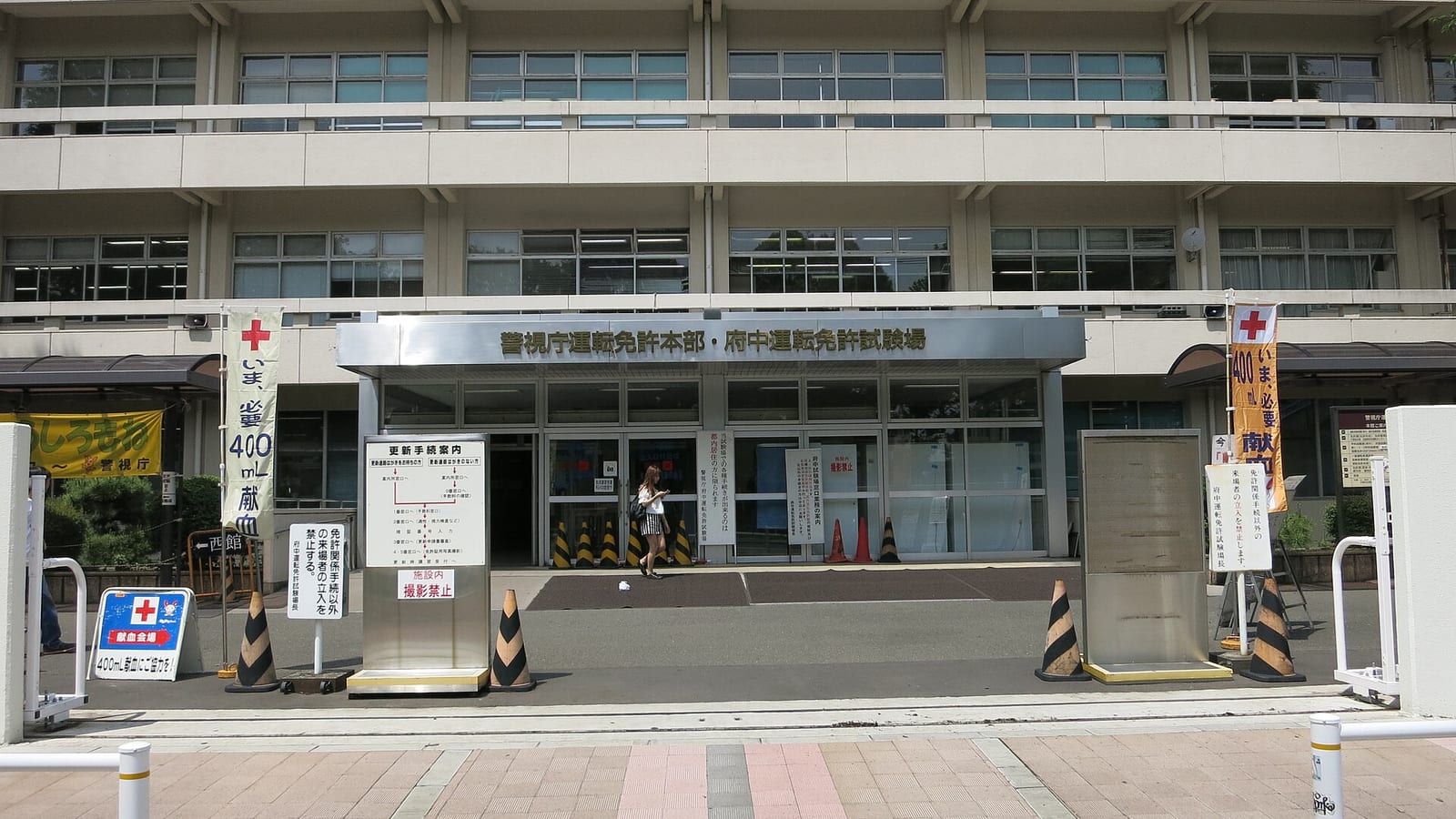
Photo: Douglas Paul Perkins, CC BY 3.0. Cropped and compressed.

I’ve never had a driver’s license. I’ve spent most of my twenties in Japan, where I didn’t really need one to get around.
I got married recently, and my partner and I started thinking about trips out of town. Being able to rent a car would give us more freedom, and driving could come in handy if our family grows. So we decided to get our licenses together. At least we can rant to each other about the ridiculousness of the whole thing.
So far, that’s meant confusing procedures, being forced to use shitty software, and taking time off work again and again. I’m approaching ¥300,000 in fees alone—roughly US$1,900—before commuting or lost income. My paid leave is gone, and I’m now requesting unpaid time off.
I signed up at the end of February. More than seven months later, I still don’t have the license.
This is a bit of a rant, but I’ll try to make it useful if you’re thinking about getting a license in Japan. I speak some Japanese and managed to figure things out. If you’re starting with zero Japanese, you’re in for an interesting ride, to say the least.
Picking a Route
If you’re starting from scratch in Japan, there are two broad routes. At a designated driving school, you take lessons and pass practical assessments, including a graduation exam. Graduates are exempt from the licensing-center practical exam, but still take the center’s written exam and aptitude checks. The other route is to take both written and practical exams at the licensing center. You can still use a school for training and support.
We chose the second route, taking our exams at Fuchu. I think my wife just searched for nearby schools and found one. I went with the school she chose.
The school handles orientation, driving-theory textbooks, scheduling, the car, instructors, and practice locations, including sessions on Fuchu’s actual closed test course. We decide how to study for the written tests; the school sorts out the practical arrangements.
I paid about ¥250,000 upfront for my part—roughly US$1,600.
Where the practical test happens
Designated driving school
- 1. School lessons and practical assessments
- 2. School practical graduation exam
- 3. Licensing-center written exam and aptitude checks
Center practical exam waived
My exam-center route
- 1. School-arranged lessons and support
- 2. Provisional written and practical exams at the center
- 3. Further practice, then full-license written and practical exams at the center
The First Written Test
The school provided Manten-sama, a study website with spaced repetition, for the provisional written test. The software itself wasn’t great, but it helped me prepare.
Compared with the full-license written exam that came later, this preparation was short and sweet. I passed the provisional written test on my first try.
I assumed the full-license written test would be more of the same, just with more questions. That turned out to be an expensive assumption.
Actually Driving
For practical lessons, I would usually head to the school in Ogikubo first. From there, an instructor drove me, other students, and other instructors to the practice course in Saitama, about an hour away by car. Between the travel and the lesson, it usually took a whole day. Once, I had an evening lesson and didn’t need to leave in the morning. That day I took the train to the nearest station, where an instructor picked me up.
I also did two-hour rehearsals on the test course at Fuchu, usually with different instructors.
The provisional practical test took me three attempts.
On the first, everything was going fine until I left the crank course, a narrow section with sharp, right-angle turns. As I turned left out of it, my rear-left tire went over the curb. I panicked and mentally gave up. I even missed a stop sign afterward, which the examiner called me out on.
The second time, I thought I was killing it. I was surprised to find out I’d failed. The feedback was about safety checks at intersections and giving way. I’d been relying on my peripheral vision on a mostly empty course, but my checks needed to be more obvious. I also lost points over priority, though I don’t remember the exact situation.
I passed on the third attempt.
Booking added to the frustration. Written tests were usually easy to book; sometimes I could get a slot the very next day. Practical tests were different. For both the provisional and final practical, I usually had to book about a month ahead. Failing meant another wait of several weeks.
More Questions, More Attempts
For the full-license written test, I used Gokaku, a free app made by an independent developer. Some questions were incorrect, but overall it was very useful. I also reported a software bug, and the developer fixed it.
The test is scored out of 100 points, with 90 needed to pass. It took me four attempts:
| Attempt | App progress | Score | Result |
|---|---|---|---|
| 1 | About 33% | 82 | Fail |
| 2 | About 66% | 89 | Fail |
| 3 | 100% | 89 | Fail |
| 4 | — | Not disclosed | Pass |
The app’s progress indicator wasn’t proof that I understood everything. But it did show that I’d worked through its questions. By the third attempt, I’d covered the whole set and was already doing mock tests. I was studying and practicing more, and still came back with 89.
Did cramming all these questions make me a better driver in Japan? I don’t think so. Too much of the preparation felt like learning to spot traps, decipher ambiguous wording, and work around broken English.
One question I remember getting wrong was about wearing a seatbelt around your waist. I answered true. It came down to the difference between your waist and your pelvis. I understood how to wear a seatbelt, but I hadn’t caught what the wording was testing. Getting that question wrong didn’t feel like it taught me anything about driving safely.
One point short means coming back. Another weekday off work, another trip to the test center, another whole day spent around a 50-minute test. Then you hope you don’t misread another sentence—or hit the button for the next page of ten questions when you only wanted the next question. Having to navigate shitty software on top of everything else didn’t help.
Between the third and fourth attempts, I focused entirely on mock tests and targeted review, including all the signs and questions involving specific numbers. I finally passed.
I’d spent more time and energy preparing for the test. I just wish more of that effort had felt useful for actually driving.
The Bill Includes My Calendar
The fees are only part of what this has cost me. I haven’t added up commuting costs yet, and I don’t have confirmed salary deductions from unpaid leave to include either.
Lessons usually took up a whole weekend day. Tests meant taking time off during the week. I used paid leave until I ran out, and now I’m requesting unpaid leave. There will be more tests and more time off before I’m done.
Employers can also choose to offer special leave for life admin, such as procedures that can only be done during weekday working hours. Whether that includes driving tests, and whether the leave is paid, depends on the company’s policy. That would have been useful here.
Still Pending
That’s three stages done: the provisional written test, the provisional practical, and the final written test. I’m taking the fourth, the final practical, in November. That can be a story for another post.
There’s a lot I’ve barely touched on: showing up at the test center for the first time, figuring out which queue to join, and using ChatGPT to make sense of forms entirely in Japanese. I could choose English for the written test, but my practical tests were in Japanese. Understanding “Turn left at number six” is another thing to prepare for. Then there’s the tablet software, the instructors, and the hours spent waiting. A bit of a time-sucking bureaucratic black hole, with plenty of stories for later.
If there’s a part you’d like to hear more about, send me a message.
References
- Tokyo Metropolitan Police: designated and non-designated driving schools (Japanese).
- Tokyo designated driving school association: routes to getting a license (Japanese).
- Ministry of Health, Labour and Welfare: special leave (Japanese).
- Manten-sama: the study website provided by my school (Japanese).
- Gokaku: an independent trainer for Japan’s written driving exams.
- Tokyo Metropolitan Police: Fuchu Driver’s License Center (Japanese).
- Kochi Prefectural Police: written-exam instructions and pass standard (Japanese).